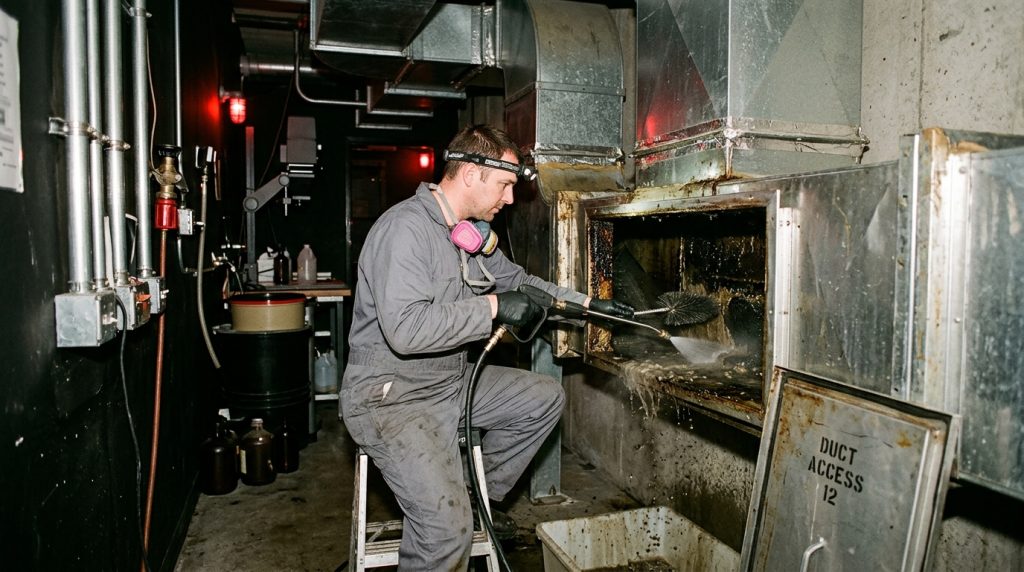
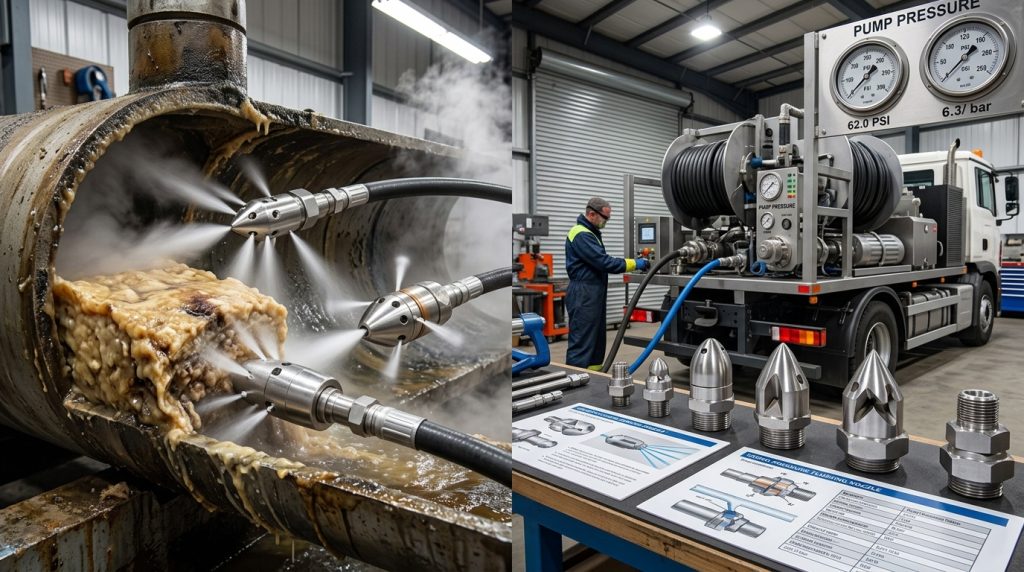
Hydro jetting removes grease blockages by directing high-pressure water through specialized nozzles inside drainage pipes. Nozzle geometry determines how water strikes deposits and propels equipment through the line. Pump pressure, flow rate, pipe condition, and blockage severity also influence cleaning effectiveness and help technicians avoid damage.
Nozzle Geometry for Grease Removal
Hydro jetting nozzles use different outlet arrangements to loosen grease, scour pipe walls, and move debris toward the drain opening. Technicians select nozzle geometry according to pipe diameter, blockage location, and the material they need to remove.
Rear-Facing and Forward-Facing Jets
Rear-facing jets direct water backward at an angle, creating thrust that pulls the hose through the pipe. Their cutting action also breaks down grease deposits and carries loosened material toward the access point. These nozzles often suit routine drain cleaning and long pipe runs.
Forward-facing jets concentrate water toward the blockage. This configuration can help penetrate localized obstructions, although technicians must consider the risk of pushing debris farther into the system. Some specialized nozzles combine forward-facing and rear-facing outlets to balance penetration, wall cleaning, and hose movement.
Rotating nozzles distribute water around the pipe circumference. Their spinning action helps remove stubborn deposits from pipe walls, while other configurations target heavy buildup with concentrated streams. Technicians must choose a design that matches the pipe material and deposit characteristics.
Pump Pressure and Water Flow
Pump pressure measures the force that drives water through the nozzle, while flow rate describes the volume delivered over time. Both values affect grease removal, so pressure alone cannot determine hydro jetting performance.
Selecting Appropriate Operating Pressure
Hydro jetting equipment can operate across a wide range of pressures, depending on the application and machine design. Residential drain cleaning may require different settings from larger commercial or industrial drainage systems. Technicians should follow equipment specifications and adjust pressure to the pipe’s condition.
| Operating factor | Effect on grease removal | Selection consideration |
|---|---|---|
| Pump pressure | Helps loosen and dislodge deposits | Match the setting to pipe condition and blockage severity |
| Water flow rate | Carries loosened grease and debris through the line | Ensure sufficient flow for the pipe diameter and waste load |
| Nozzle outlet angle | Determines jet direction and cleaning action | Select forward, rear, or rotating jets for the task |
| Pipe material | Influences resistance to jet impact | Use conservative settings for fragile or deteriorated pipes |
| Blockage severity | Determines the cleaning effort required | Increase cleaning intensity only when inspection supports it |
Pipe Conditions and Blockage Assessment
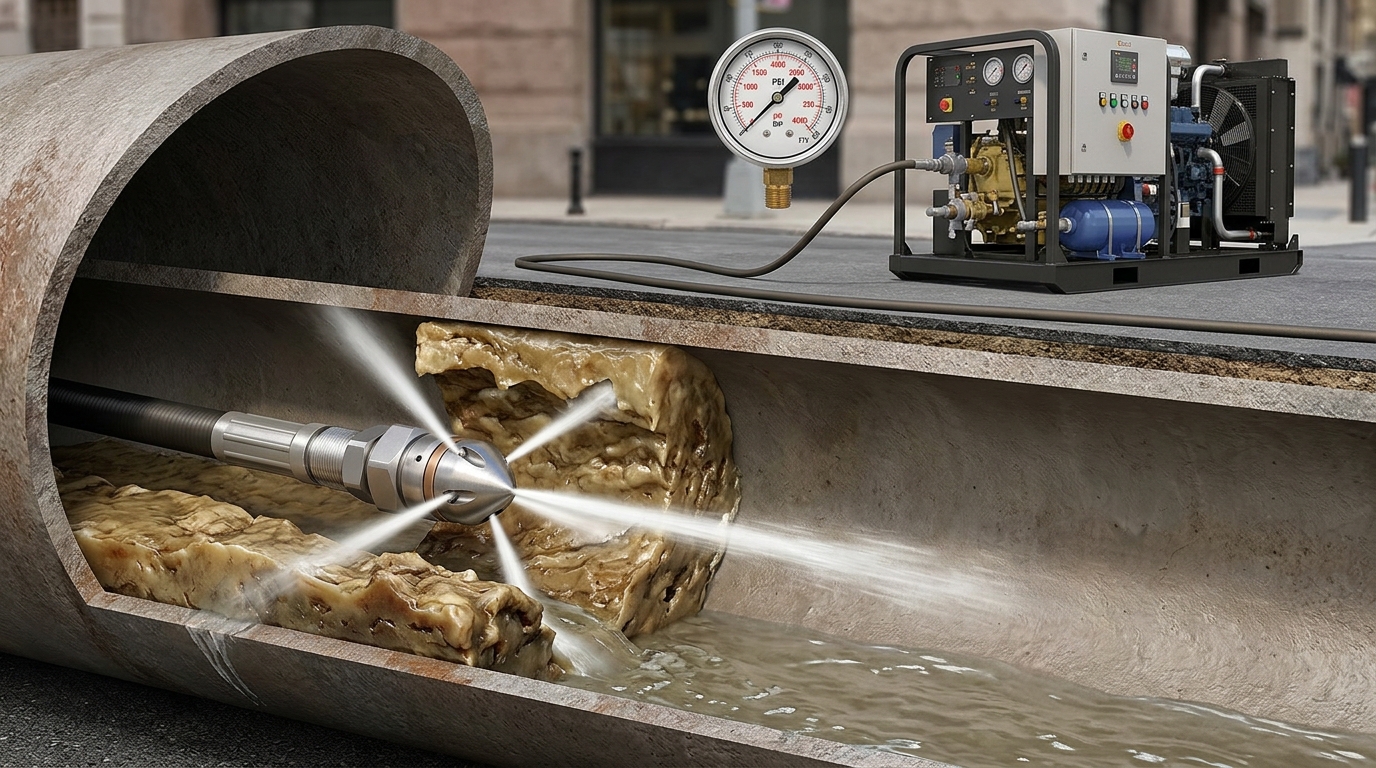
The pipe’s condition influences nozzle selection and safe operating pressure. Grease deposits can combine with food waste, soap residue, sediment, and other materials, creating blockages that require different cleaning approaches.
Inspection and Cleaning Adjustments
Before hydro jetting, technicians assess the drain layout, pipe material, blockage location, and signs of deterioration. A drain camera can help identify grease accumulation, root intrusion, cracked sections, or collapsed pipes. These findings guide equipment selection and help determine whether hydro jetting suits the installation.
During cleaning, technicians monitor equipment performance and observe how the blockage responds. They may adjust nozzle configuration, flow, or pressure according to the manufacturer’s instructions and the pipe’s condition. They should avoid forcing a nozzle through an obstruction when resistance suggests structural damage or an unsuitable cleaning method.
Afterward, a follow-up inspection can confirm whether the technician removed the deposits and restored an acceptable flow path. Proper disposal of recovered waste also prevents grease from entering other drainage systems.
Conclusion
Effective hydro jetting combines suitable nozzle geometry, appropriate pump pressure, and enough water flow to remove grease safely. A qualified drain-cleaning professional can inspect the pipe, select compatible equipment, and establish operating settings that address the blockage without compromising the drainage system.