Grease accumulation rates and duct access points influence the scope, frequency, and cost of darkroom exhaust cleaning services. Grease buildup can restrict airflow and increase fire risks, while limited access makes inspection and cleaning more difficult. Understanding both factors helps service providers develop effective maintenance plans.
Grease Accumulation Rates in Exhaust Systems
Grease accumulation rates describe how quickly grease deposits form on exhaust hoods, filters, duct walls, and connected components. The rate depends on equipment use, cooking methods, operating hours, and the efficiency of grease capture. In commercial kitchens, these factors help determine appropriate cleaning intervals.Grease Buildup and Cleaning Frequency
Heavy cooking activity and frequent frying can accelerate grease accumulation. Kitchens that operate for extended hours may therefore require more frequent cleaning than facilities with lighter workloads. Poor filter maintenance and inadequate exhaust performance can also allow grease to spread farther into the duct system. Although darkroom exhaust systems differ from commercial kitchen exhausts, some specialized environments may handle grease-producing processes or other airborne residues. Service providers must identify the actual contaminants before selecting cleaning methods. They should not assume that every darkroom exhaust system contains grease.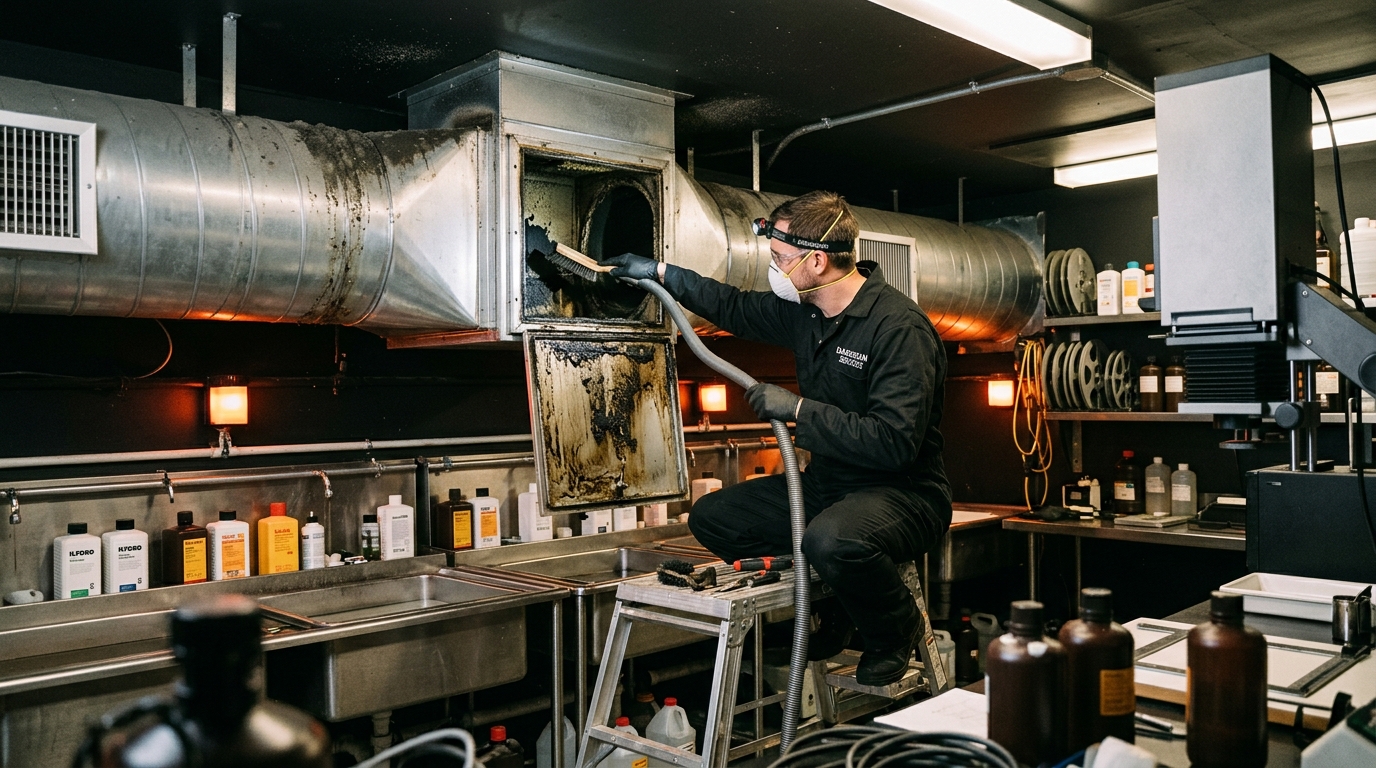 A site assessment helps technicians determine whether deposits require routine cleaning or more intensive removal. Inspection records, equipment usage, visible residue, and previous cleaning results provide useful evidence. These findings support service schedules that reflect actual operating conditions rather than fixed assumptions.
Duct Access Points and Cleaning Effectiveness
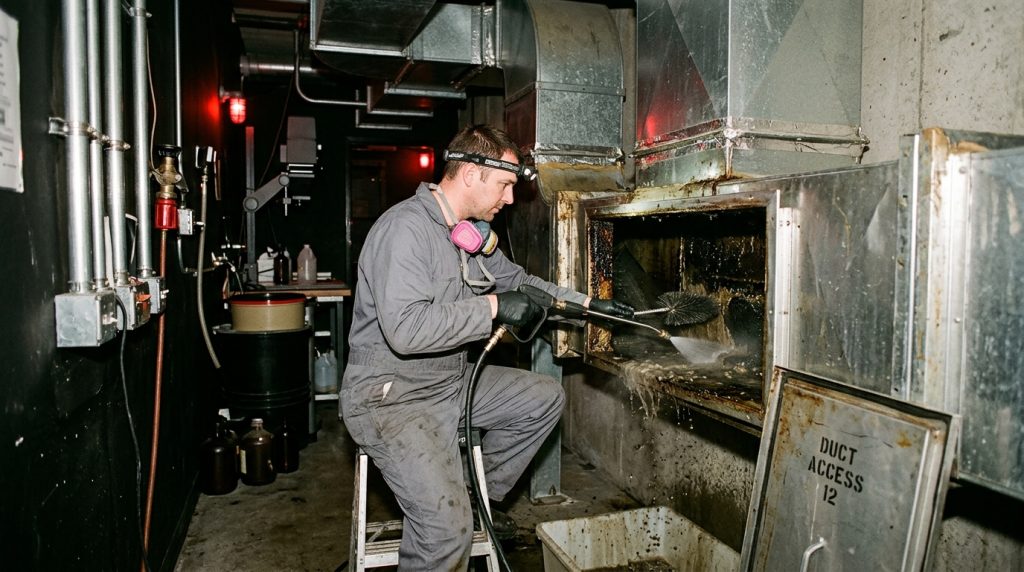
Duct access points allow technicians to inspect internal surfaces and reach areas where deposits collect. Their location, size, and condition affect cleaning coverage, labor requirements, and the ability to verify results.Access Design and Inspection Coverage
Accessible duct sections allow technicians to inspect bends, transitions, horizontal runs, and other locations where residue may accumulate. Properly positioned access doors also help cleaning teams reach concealed surfaces without unnecessary dismantling.| Duct access factor | Effect on service | Maintenance consideration |
|---|---|---|
| Access door location | Determines which sections technicians can reach | Position access near bends and other inspection points |
| Opening size | Affects tool movement and cleaning coverage | Ensure openings support safe, effective access |
| Duct length and layout | Influences inspection time and equipment needs | Map the system before work begins |
| Sealed access panels | Helps maintain system integrity | Restore secure seals after cleaning |
| Limited access | May leave hidden deposits untreated | Consider additional access points or approved dismantling |